HONDA 74120S9A505 Front Hood Latch Lock
fits model: Cr. make: Honda. year: 2003.
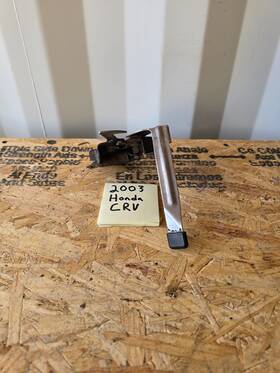
( Manufacturer Part Number: 74120S9A505 ), ( Type: Hood Latch ), ( Fitment Notes: Front ), ( Genuine Oem: Yes ), ( Material: Steel ), ( Donor Vehicle: 2003 Honda Cr-v ), ( Placement On Vehicle: Front, Hood ), ( Partout Id: 34607 )
Review HONDA Cr v Front Hood Latch Lock Assembly Oem Used fits CR 2003
The **Honda 74120S9A505 2003 CR-V Front Hood Latch Lock** is a precision-engineered replacement part designed to restore both functionality and security to the hood mechanism of a 2003 Honda CR-V. This latch lock, part of the vehicle s safety and convenience systems, ensures that the hood remains securely closed during operation, preventing accidental opening while driving and reducing the risk of interference with the windshield or other components. Crafted to meet Honda s exacting standards, this component features a durable, corrosion-resistant construction, typically made from high-quality metal alloys that withstand the rigors of daily use, exposure to varying weather conditions, and the mechanical stress of repeated engagement and disengagement. The design incorporates a reliable spring-loaded mechanism that provides smooth, consistent operation, allowing the hood to be securely latched with minimal effort while maintaining a tight seal. This part is a direct-fit replacement, meaning it is engineered to align perfectly with the original equipment manufacturer (OEM) specifications, ensuring compatibility with the 2003 CR-V s hood latch assembly without the need for modifications. Whether replacing a worn-out or damaged latch lock due to normal wear, an accident, or a failed component, this part guarantees a seamless fit and optimal performance, contributing to the vehicle s overall safety and reliability. For those seeking a dependable solution to restore their CR-V s hood latch functionality, this Honda-specific part is an essential choice for maintaining both the aesthetic integrity and operational efficiency of the vehicle.
### **Pros and Cons of Buying a 2003 Honda CR-V (VIN: 74120S9A505) with a Front Hood Latch Lock**
#### **Pros**
1. **Reliability and Durability** The 2003 Honda CR-V is known for its robust engine (the 2.4L 4-cylinder or 3.0L V6, depending on trim) and strong transmission (5-speed manual or 5-speed automatic). Many owners report few major issues if maintained properly.
2. **Good Resale Value** Honda CR-Vs hold their value well, especially compared to some competitors. A well-maintained 2003 model can still fetch a decent price in the used market.
3. **Fuel Efficiency** The 2.4L engine (if equipped) offers decent fuel economy for its class, averaging around **20-22 MPG city / 26-28 MPG highway**. The V6 version is less efficient but still manageable.
4. **Comfortable Ride and Space** The CR-V provides a smooth ride, good handling, and ample cargo space (up to **67.7 cu. ft.** with seats folded). The interior is roomy for five passengers.
5. **Proven Safety Features** The 2003 model includes standard **dual front airbags, ABS, and a stable suspension**, which were solid safety standards for the time. Some trims may also have **traction control and stability control** (depending on market).
6. **Moderate Maintenance Costs** Compared to some Japanese or European competitors, Honda parts and labor are relatively affordable. Routine maintenance (oil changes, brakes, etc.) is straightforward.
7. **Available Modifications** The front hood latch lock (a security feature) suggests the owner may have added aftermarket security, which could deter theft. If this was a factory option, it s a minor convenience.
8. **Parts Availability** Being a Honda, finding replacement parts is easy, and many mechanics are familiar with the model.
---
#### **Cons**
1. **Age and Mileage Concerns** A 2003 model is **19 years old**, meaning it has likely accumulated significant mileage (unless it s a low-mileage example). Rust, wear on suspension components, and aging belts/hoses are common issues.
2. **Potential Rust Issues** Older CR-Vs, especially those driven in snowy or salted-road regions, can develop **frame rust or body panel corrosion**. A thorough inspection of the undercarriage, wheel wells, and rocker panels is essential.
3. **Transmission Wear** The **5-speed automatic transmission** (if equipped) can develop **slipping or rough shifting** over time. The manual transmission is more durable but may require frequent clutch servicing.
4. **Electrical Gremlins** Older Hondas, including the CR-V, can suffer from **failing window regulators, door locks, or infotainment glitches** (if equipped with a CD player or early navigation systems).
5. **Suspension and Steering Wear** Bushings, shocks, and control arms may need replacement. **Power steering fluid leaks** can also occur, leading to stiff steering.
6. **Engine and Cooling System Risks**
- The **2.4L engine** is generally reliable but can develop **carbon buildup** (if not maintained properly).
- The **cooling system** may require a **radiator flush** and **thermostat replacement** if the original coolant has been neglected.
- **Timing belt** (if applicable) should be checked some models use a **chain**, but others require replacement every **100,000 miles**.
7. **Interior Wear** Upholstery, carpets, and plastics may show **signs of aging**, especially if the car has been exposed to sun or smoke.
8. **Recall and Safety History** Check the **NHTSA database** for recalls or safety-related issues on this specific VIN. Some 2003 CR-Vs had **recalls for airbag or seatbelt issues**.
9. **Fuel System Concerns** Older cars can develop **vacuum leaks, failing fuel injectors, or a clogged fuel filter**, leading to **poor acceleration or rough idling**.
10. **Resale Depreciation** While it holds value better than some cars, a 20-year-old SUV will still depreciate significantly over time.
---
### **Conclusion**
The **2003 Honda CR-V (VIN: 74120S9A505)** can be a **solid used purchase** if:- It has **low mileage** (under 100,000 miles ideally, or at least well-maintained over 150,000 miles).
- It has **no major rust issues** (especially in critical areas like the frame and subframe).
- The **transmission, suspension, and cooling system** have been properly serviced.
- The **electrical components** (windows, locks, lights) are fully functional.
However, if the car has **high mileage, neglect in maintenance, or visible rust**, it may require **significant repairs** and could end up being a **money pit**.
### **Recommendation**
Before purchasing:1. **Get a Pre-Purchase Inspection (PPI)** from a trusted mechanic this is **non-negotiable** for a car this old.
2. **Check the service records** look for **regular oil changes, timing belt (if applicable), and cooling system flushes**.
3. **Inspect for rust** especially under the car, around the wheel wells, and along the frame.
4. **Test drive thoroughly** listen for **unusual noises, check braking performance, and ensure all electronics work**.
5. **Verify the front hood latch lock** if it s an aftermarket addition, confirm it s properly installed and functional.
6. **Consider a lower-mileage alternative** if available, a **2004-2006 CR-V** may offer better longevity with slightly improved reliability.
**Final Verdict:**- **Worth it?** **Yes, if well-maintained and inspected thoroughly.**
- **Not worth it?** **If it has high mileage, rust, or a history of poor maintenance.**
- **Best use case:** A **budget-friendly, reliable daily driver or commuter** for someone who enjoys working on cars or has a mechanic they trust.
If you re comfortable with **potential repairs and maintenance**, this CR-V could be a **great value**. If you prefer **lower risk**, consider a **newer used Honda CR-V (2010 ) or a well-documented 2005-2009 model**.
Details:
Part #: 74120S9A505: ABOUT THE PART: 2003 Honda CR-V Front Hood Latch Lock Assembly OEM 74120S9A505, Used. Donor Vehicle: 2003 Honda CR-V LX 2.4L L4 - GAS FI.
part #: 74120s9a505 prices
- $19.99-$95.70
specifications dooexter:
- for models: Cr
- for makes: Honda
- mpn: 74120s9a505
- type: Hood Latch
- fitment notes: Front
- genuine oem: Yes
- material: Steel
- donor vehicle: 2003 Honda Cr-v
- placement on vehicle: Front, Hood
- partout id: 34607
payments dooexter:
- credit card: Diners-club
- wallet: Google-pay
- other
shipping dooexter:
- service: USPS Ground Advantage
- cost: $6.00
- transit: 6-13 Days
- carrier: USPS
- type: Fixed
- class: Standard
offer dooexter:
- started: February 13, 2026
- quantity: 1
- options: Ship-to-home
- sold: 0
- availability: In Stock
seller dooexter:
- # reviews: 771
- rating: 99.5%
- city: Kinston, North Carolina
general dooexter:
- Exterior Parts Accessories > Hoods > Hinges, Latches Additional Hood Components
- condition: Used
returns dooexter:
- policy: Returns Accepted
- time: 30 Days
- paid by: Seller
Honda 74120S9A505 Is Similar To:
- Hndcrx8891 Honda Crx Hood Hinges Custom Billet Dampers (31.4% similar) Eliminates need for hood stick prop weighs less than factory HINGES100 bolt-on APPLICATION100 manufactured in the us. Hood hinges w gas shocks made from 6061 t6 aluminum. Will fit honda CRX 1988 ,1989,1990,1991NO cutting no welding direct bolt-on kit...(April 11th, 2018)
- Pznkit-020418-11 Prozone Front New Auto Body Repair Kit Sedan For Honda (27.5% similar) The manufacturers warranty shall be exclusive remedy for any such product defect or failure. Some manufacturers require that you register your product to activate its warranty. Each warranty gives you specific rights, and may have other rights which vary from state. Please refer to the manufacturers...(May 25th, 2018)
- Pznkit-121017-125 Prozone Front New Auto Body Repair Kit Sedan For Honda (31.7% similar) Some manufacturers require that you register your product to activate its warranty. Please refer to the manufacturers instructions ensure that you can take advantage of your product warranty. Each warranty gives you specific rights, and may have other rights which vary from state. Please for any ...(April 26th, 2018)
- Tbtkit-011418-68 Trustbuilt New Kit Auto Body Repair Front For Honda Odyssey (26.6% similar) Each warranty gives you specific rights, and may have other rights which vary from state. Some manufacturers require that you register your product to activate its warranty. Brand new in the box - fit and quality guaranteed. Please for any questions. The manufacturers warranty shall be exclusive ...(April 6th, 2018)
- Tbtkit-020418-18 Trustbuilt New Auto Body Repair Kit Front Sedan For Honda (17% similar) Each warranty gives you specific rights, and may have other rights which vary from state. Some manufacturers require that you register your product to activate its warranty. Please for any questions. Brand new in the box - fit and quality guaranteed. The manufacturers warranty shall be exclusive ...(March 10th, 2018)
- Tbtkit-020418-20 Trustbuilt New Kit Auto Body Repair Front Sedan For Honda (21.3% similar) Each warranty gives you specific rights, and may have other rights which vary from state. Please for any questions. Brand new in the box - fit and quality guaranteed. The manufacturers warranty shall be exclusive remedy for any such product defect or failure. Some manufacturers require that you ...(March 10th, 2018)
- Tbtkit-020418-33 Trustbuilt New Kit Auto Body Repair Front Coupe For Honda (22.7% similar) Some manufacturers require that you register your product to activate its warranty. Each warranty gives you specific rights, and may have other rights which vary from state. Brand new in the box - fit and quality guaranteed. Please for any questions. The manufacturers warranty shall be exclusive ...(March 10th, 2018)
- Tbtkit-020418-39 Trustbuilt New Kit Auto Body Repair Front Sedan For Honda (17% similar) Brand new in the box - fit and quality guaranteed. The manufacturers warranty shall be exclusive remedy for any such product defect or failure. Please for any questions. Each warranty gives you specific rights, and may have other rights which vary from state. Some manufacturers require that you ...(March 10th, 2018)
- Tbtkit-020418-40 Trustbuilt New Auto Body Repair Kit Front Sedan For Honda (17% similar) Each warranty gives you specific rights, and may have other rights which vary from state. Brand new in the box - fit and quality guaranteed. The manufacturers warranty shall be exclusive remedy for any such product defect or failure. Please for any questions. Some manufacturers require that you ...(March 10th, 2018)
- Tbtkit-020418-45 Trustbuilt New Auto Body Repair Kit Front Sedan For Honda (19.9% similar) Please for any questions. The manufacturers warranty shall be exclusive remedy for any such product defect or failure. Some manufacturers require that you register your product to activate its warranty. Each warranty gives you specific rights, and may have other rights which vary from state. Brand ...(March 9th, 2018)
- Tbtkit-020418-72 Trustbuilt New Auto Body Repair Kit Front For Honda Odyssey (26.6% similar) Brand new in the box - fit and quality guaranteed. Please for any questions. Each warranty gives you specific rights, and may have other rights which vary from state. The manufacturers warranty shall be exclusive remedy for any such product defect or failure. Some manufacturers require that you ...(March 10th, 2018)