CHEVROLET TRUCK TCHEV3500 Hood Latch Lock 181.GM8794
fits model: 3500, 2500, 1500. make: Chevrolet. year: 1989–1994.
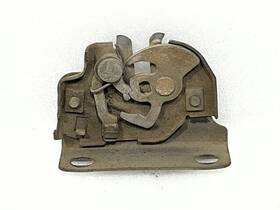
( Brand: Chevrolet Truck ), ( Manufacturer Part Number: TCHEV3500 ), ( Conditions Options: A, Hood Latch ), ( Genuine Oem: Yes ), ( Ipn: 181.gm8794 ), ( Warranty: 60 Day ), ( Type: Hood Latch )
Review CHEVROLET TRUCK Pickup Hood Latch Lock fits 3500 2500 1500 1989–1994
The **Chevrolet 181.GM8794 hood latch lock assembly** is a critical, yet often overlooked component designed for the **1989 1994 Chevrolet 3500, 2500, and 1500 series trucks**, including models like the Silverado, C/K, and Suburban. This durable, bolt-on mechanism is engineered to secure the hood latch in a closed position, preventing accidental opening during transit or rough handling an essential feature for maintaining safety and cargo integrity in heavy-duty applications. Crafted from high-quality stamped steel, the latch lock features a robust, spring-loaded design that ensures a firm, reliable hold, even under vibration or jostling conditions. The assembly integrates seamlessly with the existing hood latch system, utilizing a simple yet effective lever mechanism that can be manually engaged or disengaged with minimal effort, making it both user-friendly and practical for daily use. Whether installed on a **3500 HD pickup** hauling heavy loads or a **1500 crew cab** used for work or recreation, this latch lock provides peace of mind by ensuring the hood remains securely fastened, reducing the risk of damage to underhood components or exposure to weather elements. Its universal compatibility across multiple model years from the **1989 GM8794 chassis** to the refined updates of the **1994 models** makes it a versatile upgrade for fleet vehicles, contractors, or enthusiasts seeking enhanced protection for their truck s engine bay. Built to withstand the demands of rugged environments, this latch lock is a testament to Chevrolet s engineering legacy, offering a balance of simplicity, strength, and functionality for those who rely on their trucks for demanding tasks.
### **Pros and Cons of Buying a Chevrolet 3500/2500/1500 (1989 1994) with a Hood Latch Lock**
#### **Overview**
The Chevrolet 3500, 2500, and 1500 series trucks from 1989 to 1994 are classic mid-size pickup trucks known for their durability, strong engines, and simple mechanics. However, they come with both advantages and significant drawbacks, particularly regarding reliability, modern safety, and maintenance costs. Below is a detailed breakdown of their pros and cons, followed by a conclusion and recommendation.
---
### **Pros**
1. **Strong and Reliable Engines**
- The **3500 series** (full-size) typically comes with the **5.0L (V8) or 7.4L (V8) Vortec** engines, which are known for their longevity if properly maintained. The **5.0L** (in the 1989 1991 models) is a robust inline-six or V8, while the **7.4L** (introduced in 1992) is a powerful V8 that can last well over 200,000 miles with regular upkeep.
- The **2500 and 1500** often feature the **4.3L V6 (Vinylite or Vortec)** or **5.0L V8**, which are also durable but less powerful than the 7.4L.
- These engines are **easy to work on** due to their simplicity compared to modern fuel-injected systems.
2. **Proven Durability**
- Many of these trucks were built to last, especially in commercial and agricultural settings. With proper maintenance, they can handle heavy loads and rough conditions.
- The **transmissions** (3-speed automatic, 4-speed manual, or 4L60-E automatic in later models) are robust, though the 4L60-E can be finicky if not serviced correctly.
3. **Simplicity and Repairability**
- Compared to modern trucks, these models have **fewer electronic components**, making diagnostics and repairs more straightforward and less expensive.
- Parts are widely available, and mechanics familiar with older GM trucks are common.
- The **mechanical fuel injection (in some models)** is less prone to failure than modern fuel systems.
4. **Good Towing and Hauling Capacity**
- The **3500 series** (especially with the 7.4L engine) can tow **up to 10,000 lbs** with proper equipment, making them suitable for heavy-duty work.
- The **2500 and 1500** are still capable of handling moderate towing (5,000 8,000 lbs) and payloads.
5. **Classic Appeal and Customization Potential**
- These trucks have a **nostalgic, rugged look** that appeals to enthusiasts. They can be easily modified or restored to look like they rolled off the lot.
- The **open hood latch lock** (a security feature) is a minor quirk but adds to their vintage charm.
6. **Lower Initial Purchase Price**
- Compared to modern trucks, these models are **cheap to buy**, especially for those seeking a project vehicle or a backup work truck.
---
### **Cons**
1. **Outdated Safety Features**
- **No modern safety tech**: These trucks lack **airbags, anti-lock brakes (ABS), electronic stability control (ESC), or traction control**. Modern safety standards are nonexistent.
- **Poor crash protection**: The **rigid body and frame** offer little in the way of crumple zones or modern safety cage designs. Rollovers are a significant risk.
- **No seatbelts in the cargo area**: Many models lack rear seatbelt anchors, making them unsafe for passengers in the bed.
2. **Poor Fuel Economy**
- The **V8 engines (5.0L, 7.4L)** get **8 12 MPG combined**, while the **V6 (4.3L)** does slightly better at **12 15 MPG**. Modern trucks achieve **20 MPG** with similar power.
- High fuel consumption adds up over time, especially for daily driving.
3. **Rust and Corrosion Issues**
- Many of these trucks were built in the **1980s early 1990s**, a time when rust was a major concern. **Floor pans, rocker panels, and wheel wells** are common weak points.
- **Salt and moisture damage** can compromise structural integrity, leading to expensive repairs if not addressed early.
4. **Electrical System Problems**
- **Flickering lights, dead batteries, and unreliable alternators** are common due to aging wiring and poor grounding.
- **No computer diagnostics**: Troubleshooting electrical issues requires **multimeters and manual testing**, unlike modern OBD-II systems.
- **Hood latch lock** (a security feature) can be **annoying** it requires a key to unlock the hood, which can be lost or break over time.
5. **Transmission and Drivetrain Wear**
- **3-speed automatics** (common in early models) are **less efficient** and prone to slipping or failure.
- **4L60-E automatic (1993 1994)** is more reliable but **requires frequent fluid changes** to avoid failure. Modern transmissions are far more durable.
- **Differential and transfer case wear** is common in high-mileage examples, leading to **leaking seals and noisy operation**.
6. **Emissions and Modern Compliance Issues**
- **No modern emissions controls**: These trucks may **fail smog checks** in states with strict regulations.
- **No EGR or PCV systems**: Modern trucks have **exhaust gas recirculation (EGR) and positive crankcase ventilation (PCV)**, which help reduce emissions. Older trucks lack these, leading to **harsher engine operation**.
- **No OBD-II diagnostics**: If emissions-related issues arise, diagnosing them is **much harder** than on modern trucks.
7. **High Maintenance Costs Over Time**
- While parts are cheap, **labor costs add up** due to the complexity of some repairs (e.g., rebuilding a 7.4L engine).
- **Suspension components (shocks, bushings, ball joints)** wear out quickly, requiring frequent replacements.
- **Brakes** (especially drum brakes on some models) are **less effective** than modern disc brake systems.
8. **Limited Modern Comfort and Convenience**
- **No power windows/locks** (common in older models).
- **Basic interior** with **no climate control** (many have manual AC or none at all).
- **No modern infotainment or Bluetooth connectivity**.
- **Poor visibility** due to **smaller windows and higher cab designs**.
9. **Reliability Decline in High-Mileage Examples**
- Many of these trucks **exceed 200,000 300,000 miles**, leading to **engine wear, transmission failure, and frame rust**.
- **No modern warranties or extended coverage** repairs are **out-of-pocket**.
10. **Resale Value is Minimal**
- These trucks **lose value quickly** and are **not considered collector items** (unlike some muscle cars or Jeeps).
- If sold later, the return on investment is **very low**.
---
### **Conclusion**
Buying a **1989 1994 Chevrolet 3500/2500/1500 with a hood latch lock** can be a **great choice under specific circumstances**, but it is **not a practical daily driver or long-term investment** for most people. These trucks excel in **durability, simplicity, and raw power**, making them ideal for:
- **Occasional use** (e.g., weekend projects, light hauling).
- **Budget-conscious buyers** who prioritize **cheap parts and easy repairs**.
- **Enthusiasts who enjoy restoring or modifying classic trucks**.
- **Those needing a **backup work truck** in a rural or low-mileage setting.
However, they are **poor choices** for:- **Daily commuters** (due to poor fuel economy, safety, and comfort).
- **Families or passengers** (lack of safety features, no seatbelts in the bed).
- **Long-term ownership** (high maintenance costs, rust, and reliability issues).
- **Anyone who values modern convenience or safety**.
---
### **Recommendation**
#### **Buy If:**You are **mechanically inclined** and enjoy **working on projects**.
You need a **cheap, reliable truck for occasional heavy-duty work** (e.g., farming, towing small trailers).
You **prioritize raw power and simplicity** over modern amenities.
You **plan to keep it for a short period** (1 3 years) and then sell it.
You **find a low-mileage example (under 100,000 miles) with full service records** and **no major rust or transmission issues**.
#### **Do Not Buy If:**You **drive it daily
Details:
222000 not available or unknown.
specifications dooexter:
- for models: 3500, 2500, 1500
- for makes: Chevrolet
- for years: 1989-1994
- brand: Chevrolet Truck
- mpn: Tchev3500
- conditions options: A, Hood Latch
- genuine oem: Yes
- ipn: 181.gm8794
- warranty: 60 Day
- type: Hood Latch
offer dooexter:
- availability: In Stock
- started: February 12, 2026
- best offers: True
- sold: 0
- quantity: 1
- options: Ship-to-home
returns dooexter:
- paid by: Buyer
- time: 60 Days
- policy: Returns Accepted
shipping dooexter:
- cost: $10.00
- transit: 5-8 Days
- class: Standard
- service: Standard
- type: Fixed
general dooexter:
- Exterior Parts Accessories > Hoods > Hinges, Latches Additional Hood Components
- condition: Used
payments dooexter:
- credit card: Diners-club
- wallet: Apple-pay
- other
seller dooexter:
- rating: 99.3%
- # reviews: 2021 4
- city: Rancho Cordova, California
Chevrolet Truck TCHEV3500 Is Similar To:
- 225 And 1030 Danchuk Chevrolet Hood Side Bumpers Front Stop Bolts (21.3% similar) New in original packaging. A set of 1955 Chevrolet hood side bumpers, dank 225 and pair front stop bolts, for...(September 4th, 2018)
- 3692103d 3692103d Chevrolet Early 1950s Pickup (31.2% similar) This early 1950S Chevy pickup hood name emblem is gorgeous, it either brand new, or has just been re-chrome plated - either way, you'll love. The emblem is 9 long, gm part number 3692103D...(September 14th, 2017)
- 02049001 02049002 Chevrolet Gm Gmc Pair Nos Hood Hinges For Chevy Medium (28.9% similar) For the left and right positions, respectively, on Chevrolet GMC medium Truck model's CD, Ce, cg, cm, cs, me,mm that have cabs with fiberglass hoods. Car auto automobile automotive classic commercial delivery utility pickup pick-up actual shipping cost only. These are gm part nos. Group replaced by...(May 25th, 2018)
- 092618 Chevrolet Chevy Pickup Truck Hood Side Emblems Pair (32.9% similar) This part fits most 1952 Chevrolet Truck hood side emblems pair excellent reproduction...(September 27th, 2018)
- 1068j Dynacorn Chevrolet Camaro Hood Latch Assembly (31.7% similar) 69 Camry hood latch assembly...(August 21st, 2018)
- 110280-1955-1956-1957-56-chevrolet-pickup-pick-up United Pacific 55-57 Chevy (17.6% similar) ...(August 18th, 2017)
- 1109 Mikes Chevrolet Or Gmc Truck New Pair Hood Hinge Springs (33.5% similar) One pair of new 58 or 59 Chevy Truck cad plated hood hinges with springs, fit all model Trucks...(October 24th, 2018)
- 1109t U Mikes Chevrolet Or Gmc Truck New Pair Hood Hinge Springs (32.9% similar) One pair of new Chevy Truck cad plated hood hinges with springs, fit all model Trucks except 55 1ST series, series look like the 47 to 54...(September 30th, 2018)
- 12337985 Gm Nos Chevrolet Hood Bumper Part Pack Of (25% similar) Happy buying...(November 24th, 2018)
- 14034129-30 Oer Hood Hinge Set Pontiac Firebird Chevrolet Camaro (15.2% similar) To maintain the structural integrity of hood, they should be replaced. For larger items, they are shipped FedEx or ups to the continental us only. Original hood hinges can bend or become damaged. Damaged or defective merchandise will not be replaced if it was due to alteration, improper use ...(June 10th, 2018)
- 165000613 Gm Chevy Chevrolet Corvette Under Hood Light Lamp Harness Engine (26.2% similar) I want to help. The part number is gm and was for use on 1984 to this includes original wiring connector...(February 28th, 2019)