CHEVROLET 14072664 Front Tow Hooks K20 K30
fits model: K10, C10, C20, C30, Suv. make: Chevrolet. year: 1981–1991.
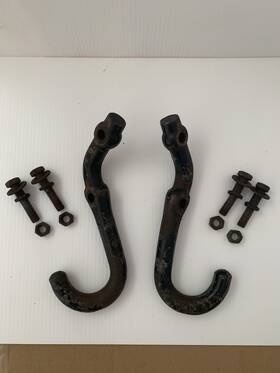
( Manufacturer Part Number: 14072664 ), ( Type: Tow Hooks ), ( Attachment Type: Bolt-on ), ( Features: Matching Pair ), ( Placement On Vehicle: Front )
Review CHEVROLET Oem Front Tow Hooks Truck And K20 K30 fits K10 C10 C20 C30 SUV 1981–1991
These **1981 1991 Chevrolet Front Tow Hooks** are robust, heavy-duty components designed specifically for the **K-series (K10, K20, K30) and C-series (C10, C20, C30) SUVs and pickup trucks**, offering reliable towing and recovery capabilities for off-road adventures, farm work, or everyday utility tasks. Crafted from **high-strength steel**, these tow hooks are engineered to withstand significant stress, ensuring durability even under heavy loads or repeated use. Each hook features a **smooth, rounded design** to minimize wear on cables, chains, or straps while providing a secure attachment point for towing straps, winches, or recovery gear. The **threaded shank** allows for easy installation and removal, accommodating a variety of bolt sizes to fit the original mounting points on your vehicle s frame, typically located near the front bumper or fender wells. These hooks are particularly well-suited for the **Chevy K/C series**, which were built with versatility in mind, making them ideal for both on-road towing and off-road recovery scenarios. Whether you're hauling a trailer, assisting in a vehicle recovery, or reinforcing your truck s utility, these tow hooks deliver **uncompromising strength and functionality** while maintaining compatibility with the classic design of your 1980s or early 1990s Chevrolet SUV or pickup. Built to last, they offer a simple yet effective solution for enhancing your vehicle s off-road and towing performance.
### **Pros and Cons of Buying a 1981 1991 Chevrolet SUV with Front Tow Hooks (K10, K20, K30, C10, C20, C30)**
#### **Pros**
1. **Reliability and Durability**
- These trucks and SUVs were built to last, with simple mechanical designs that are easier to repair than modern electronics-heavy vehicles.
- Many were used in agricultural, construction, and off-road applications, meaning they were often well-maintained by their original owners.
- The frame and drivetrain components are robust, making them suitable for heavy-duty tasks if properly cared for.
2. **Off-Road and Utility Capabilities**
- The front tow hooks suggest these vehicles were designed for towing, hauling, or off-road use, making them practical for work or recreational purposes.
- Some models (like the K-series) had higher ground clearance and solid axles, improving off-road performance compared to modern light-duty trucks.
- The simplicity of the suspension allows for easier modifications (e.g., lift kits, heavier springs) for off-road use.
3. **Affordability**
- Prices for these vehicles are generally low, especially for older models, making them an attractive option for budget-conscious buyers.
- Parts are widely available and often inexpensive compared to newer vehicles, reducing long-term maintenance costs.
- Insurance and registration fees are typically lower than for modern trucks.
4. **Customization Potential**
- The basic chassis and drivetrain allow for extensive modifications, from engine swaps to body kits.
- Many enthusiasts restore or rebuild these vehicles, leading to a strong aftermarket for parts and accessories.
- The simplicity of the design means DIY repairs and upgrades are more accessible than on modern trucks with complex electronics.
5. **Nostalgia and Community**
- These trucks have a cult following among classic vehicle enthusiasts, offering a sense of community and shared passion.
- Restoring or driving one can be a rewarding hobby for those who appreciate vintage automotive design.
- The vehicles often hold sentimental value for collectors and those who grew up with them.
6. **Fuel Efficiency (Compared to Modern Trucks)**
- While not as efficient as modern diesel trucks, many of these models (especially the smaller K-series) were designed for fuel economy relative to their size.
- Gasoline engines from this era are often easier to run on alternative fuels (e.g., ethanol blends) than modern fuel-injected systems.
7. **Resale Value for Enthusiasts**
- Well-maintained examples, especially rare or restored models, can hold or even appreciate in value among collectors.
- Parts from these vehicles are still in demand, making them a good candidate for long-term ownership if preserved properly.
---
#### **Cons**
1. **Aging Mechanical Components**
- Suspension parts (shocks, springs, bushings) wear out quickly, especially on rough roads or off-road use.
- Rust is a major concern, particularly in frame rails, axles, and wheel wells, which can compromise structural integrity.
- Older engines (especially the 4-cylinder and 6-cylinder gas models) may have issues with head gaskets, timing belts, and fuel systems.
2. **Poor Fuel Economy**
- Most of these vehicles were designed for towing and hauling, not efficiency. Even the smaller models (like the K10) get poor mileage by today s standards.
- Diesel models (if available) may have emissions concerns, as they were not built to modern standards.
3. **Outdated Safety Features**
- No modern safety features (airbags, ABS, stability control, or advanced driver-assistance systems).
- Poor crashworthiness compared to modern trucks, making them risky in collisions.
- No modern seat belts or restraint systems in some cases.
4. **Reliability Issues with Older Engines**
- Many engines from this era (e.g., the 250 305cid V8s, 250 305cid straight-6s) are prone to:- Head gasket failures (especially in aluminum-block engines).
- Rod knock or bearing wear in high-mileage examples.
- Fuel system issues (carburetors, vacuum leaks, or distributor problems).
- Diesel engines (if present) may have turbocharger or fuel injection failures.
5. **Transmission Problems**
- Manual transmissions (especially the 4-speed and 5-speed non-synchro models) can be difficult to shift and may require frequent maintenance.
- Automatic transmissions (like the 3-speed TH350 or 4-speed 700R4) can leak fluid and wear out synchronizers over time.
- Clutch wear is a common issue in manual transmissions.
6. **Electrical System Limitations**
- Older wiring harnesses and fuses can be unreliable, leading to intermittent electrical issues.
- No modern diagnostics or computer controls, making troubleshooting harder.
- Alternators and starters may fail without warning, especially in high-mileage examples.
7. **Maintenance Requirements**
- Regular upkeep is essential to prevent major failures (e.g., fluid changes, rust treatment, suspension checks).
- Many owners underestimate the cost of restoring these vehicles to reliable condition.
- Parts may require sourcing from junkyards or specialty suppliers, adding to maintenance costs.
8. **Driving Experience**
- Poor ergonomics (e.g., stiff seats, poor visibility, noisy cabins).
- Modern trucks offer far better ride comfort, handling, and noise insulation.
- No modern features (cruise control, power steering, heated seats, etc.).
9. **Environmental and Legal Concerns**
- Older vehicles may not meet modern emissions standards, leading to restrictions in some areas.
- Some states require smog checks or have restrictions on pre-1975 vehicles.
- Tire and exhaust regulations may not align with modern standards.
10. **Limited Modern Support**
- Fewer mechanics are familiar with these vehicles, making repairs more challenging.
- Insurance and warranty options are minimal compared to modern trucks.
- Loan approval can be difficult due to the vehicle s age and lack of resale value in mainstream markets.
---
### **Conclusion**
Buying a 1981 1991 Chevrolet SUV with front tow hooks (K10, K20, K30, C10, C20, C30) can be a rewarding experience if you prioritize practicality, customization, or nostalgia over modern convenience. These vehicles excel in durability, off-road capability, and affordability, making them ideal for enthusiasts, hobbyists, or those needing a rugged work truck. However, they come with significant drawbacks, including poor fuel economy, outdated safety features, high maintenance requirements, and reliability issues that can be costly to address.
**If you are:**- A **restorer or enthusiast** who enjoys working on classic vehicles and appreciates their history, these trucks are excellent choices.
- Looking for a **budget-friendly work truck** for light hauling or off-road use, they can be practical with proper maintenance.
- Willing to **invest time and money** into repairs, upgrades, and upkeep, they offer great value for the price.
**If you are:**- Seeking a **modern, reliable, and safe** vehicle for daily use, these trucks are not the best option.
- Unwilling to deal with **high maintenance costs** or **mechanical challenges**, consider a newer used truck instead.
- Prioritizing **fuel efficiency, comfort, or technology**, these older models will fall short.
---
### **Recommendation**
**Buy one if:**- You have experience with classic vehicles or are willing to learn.
- You plan to use it for **off-road, hauling, or as a project vehicle** rather than daily driving.
- You can afford the **upfront cost of repairs and restoration** (budget at least $3,000 $5,000 for a reliable example).
- You enjoy the **hobby of restoring or modifying** and don t mind the trade-offs in comfort and safety.
**Avoid buying one if:**- You need a **reliable, low-maintenance vehicle** for daily use.
- You cannot commit to **regular maintenance and potential major repairs**.
- You prioritize **modern safety, fuel efficiency, or technological features**.
- You are not prepared for the **challenges of driving an older, less refined truck**.
**Best Approach:**- **Inspect thoroughly** for rust, engine condition, and transmission health.
- **Test drive** to check for handling issues, leaks, or electrical problems.
- **Get a pre-purchase inspection** from a mechanic familiar with these vehicles.
- **Start with a lower-mileage example** (under 100,000 miles) if possible, preferably with a known service history.
- **Consider a diesel model** (if available) for better towing capability, but be aware of emissions and turbocharger issues.
For most buyers, a **well-maintained newer used truck** (e.g., 2000s 2010s Ford F-150, Chevrolet Silverado, or Toyota Tundra) offers a better balance of reliability, safety, and practicality. However, if you re drawn to the charm and ruggedness of these classic Chevrolets, they can be a fantastic addition to your garage just be prepared for the work involved.
Details:
C10 C20 C30 C1500 C2500 C3500. OEM GENUINE GM 1980s ERA.
part #: 14072664 price
- $175.00
specifications dooexter:
- for models: K10, C10, C20, C30, Suv
- for makes: Chevrolet
- for years: 1981-1991
- mpn: 14072664
- type: Tow Hooks
- attachment type: Bolt-on
- features: Matching Pair
- placement on vehicle: Front
payments dooexter:
- wallet: Paypal
- credit card: Diners-club
- other
offer dooexter:
- quantity: 1
- sold: 0
- options: Ship-to-home
- availability: In Stock
- started: May 12, 2026
- best offers: True
general dooexter:
- Exterior Parts Accessories > Hoods > Hinges, Latches Additional Hood Components
- condition: Used
shipping dooexter:
- service: USPS Ground Advantage
- transit: 3-8 Days
- class: Standard
- carrier: USPS
- cost: $0.00
- type: Fixed
seller dooexter:
- city: Centereach, New York
- # reviews: 781
- rating: 100.0%
returns dooexter:
- paid by: Seller
- time: 30 Days
- policy: Returns Accepted
Chevrolet 14072664 Is Similar To:
- 225 And 1030 Danchuk Chevrolet Hood Side Bumpers Front Stop Bolts (29.9% similar) New in original packaging. A set of 1955 chevrolet hood side bumpers, dank 225 and pair front stop bolts, for...(September 4th, 2018)
- 092618 Chevrolet Chevy Pickup Truck Hood Side Emblems Pair (41.1% similar) This part fits most 1952 chevrolet truck hood side emblems pair excellent reproduction...(September 27th, 2018)
- 1109 Mikes Chevrolet Or Gmc Truck New Pair Hood Hinge Springs (36.2% similar) One pair of new 58 or 59 Chevy truck cad plated hood hinges with springs, fit all model trucks...(October 24th, 2018)
- 1109t U Mikes Chevrolet Or Gmc Truck New Pair Hood Hinge Springs (36.8% similar) One pair of new Chevy truck cad plated hood hinges with springs, fit all model trucks except 55 1ST series, series look like the 47 to 54...(September 30th, 2018)
- 1999-07 Chevrolet Gmc Pickup Truck (36.1% similar) Chevy or chevrolet suburban GMC sierra full size pickup truck. This item is oem and a very nice soft rubber Chevy chevrolet Silverado full size pickup truck...(November 7th, 2017)
- 3744704 2367481 B Nos 58 59 Chevrolet Series 3 Truck Hood Latch Plate Assembly Rare Gm (39.1% similar) This lock is nos and has never been installed. Sales are final and sold as is pictured. No box on this one. Whether you re looking for parts to keep your oldie on the road, restoring your dream cruiser, accessorizing your bomb, or riding slow in your low rider join our group of classic car fans. B ...(August 19th, 2016)
- 3721015 Gm Chevy Chevrolet Truck Nos Hood Springs (38% similar) 7 USPS shipping in the continental USA only. These springs are for the purist who only wants to put genuine gm parts of their classic. Featured here are a pair of nos hood springs for your 55 Chevy and truck. Gm they are nos in the old box and always stored in doors...(April 1st, 2018)
- 3722231-c-4 General Motors Vintage Chevrolet Chevy Trunk Ornament Emblem Gm Oem (32.3% similar) ...(March 2nd, 2018)
- 3722453 C 7 General Motors Vintage Chevrolet Chevy Hood Ornament Emblem Gm Oem (31.3% similar) ...(March 2nd, 2018)
- 3765304 General Motors Chevrolet Truck Hood Hinge Right Hand Used (32.7% similar) ...(June 17th, 2018)
- 3888579 Chevrolet Nos Truck Hood Latch (38.1% similar) Nos chevrolet truck hood latch...(March 9th, 2018)