BUICK 1237520 Nos Riviera Secondary Hood Latch Gm
fits make: Buick. year: 1971–1973.
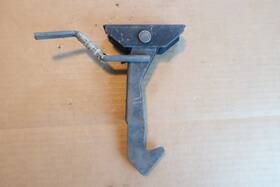
( Manufacturer Part Number: 1237520 ), ( Color: Black ), ( Material: Steel ), ( Vintage Part: Yes ), ( Placement On Vehicle: Front ), ( California Prop 65 Warning: Most Likely ), ( Type: Hood Latch ), ( Attachment Type: Bolt-on ), ( Style: Oem ), ( Features: Easy Installation ), ( Universal Fitment: No ), ( Finish: Primed ), ( Country Of Origin: United States )
Review BUICK Nos Riviera Secondary Hood Latch Genuine Gm Part fits 1971–1973
The **Buick 1237520 NOS (New Old Stock) Secondary Hood Latch** from the **1971 1973 Riviera** is a meticulously preserved, high-quality replacement part designed to restore authenticity and functionality to your classic Buick. This latch, originally manufactured by General Motors, is a direct-fit solution for the secondary hood release mechanism, ensuring a seamless and secure operation of your vehicle s hood. Crafted from durable, corrosion-resistant materials, this latch is built to withstand the test of time, just like the original components from its era. The design features a smooth, chrome-plated finish that complements the elegant lines of the 1971 1973 Riviera, while the robust construction guarantees reliable performance without the need for modifications. Whether you're restoring a show-quality Riviera or maintaining a daily driver, this NOS latch provides the perfect blend of heritage and dependability. Its compatibility with the GM body style ensures an easy installation, allowing enthusiasts to preserve the integrity of their vehicle s original engineering. With its timeless appeal and functional excellence, this secondary hood latch is an essential addition for any Buick collector seeking to maintain the classic charm and mechanical precision of their 1971 1973 Riviera.
### Pros and Cons of Buying a 1971 1973 Buick Riviera (VIN 1237520) with a Secondary Hood Latch Issue
#### **Pros**
1. **Classic American Muscle Car Appeal** The 1971 1973 Buick Riviera, particularly with the 455 cubic inch V8 engine (common in this VIN range), is a highly sought-after muscle car. Its distinctive styling, power, and heritage make it a desirable collector s item.
2. **Strong Engine Options** Many Rivieras from this era came with the **455 V8**, which is one of the most powerful and reliable Buick engines of the time. When properly maintained, it can provide solid performance, especially if modified.
3. **Luxury and Comfort** The Riviera was known for its plush interior, smooth ride, and high-quality materials, making it a comfortable cruiser even by today s standards.
4. **Potential for Restoration or Modification** If the car is in need of work, its classic status means there is a market for restored examples. Enthusiasts often invest in bringing these back to showroom condition.
5. **Secondary Market Demand** Classic Buicks, especially Rivieras, hold value well in the collector car market, especially if they are well-documented or have originality.
6. **GM Parts Availability** While some parts may be harder to find than on modern vehicles, GM s legacy parts network still supports older models, and aftermarket options are widely available.
7. **Potential for Customization** The Riviera s design allows for unique modifications, from engine swaps to interior upgrades, appealing to custom car enthusiasts.
---
#### **Cons**
1. **Secondary Hood Latch Issue** A faulty secondary hood latch is a common problem in older GM vehicles, including the Riviera. This can lead to the hood popping open unexpectedly, posing a safety hazard. Repairing or replacing the latch may require sourcing a replacement part, which can be difficult and costly.
2. **Rust and Structural Corrosion** Many Rivieras from this era suffer from rust, particularly in the wheel wells, frame rails, and floor pans. A thorough inspection is essential to assess structural integrity.
3. **Electrical System Reliability** Older GM vehicles, especially those from the early 1970s, often have unreliable wiring, faulty switches, and weak alternators. Electrical gremlins can be a persistent issue.
4. **Engine and Transmission Wear** The 455 V8 is powerful but can be thirsty for oil and prone to internal wear if not maintained properly. Automatic transmissions (common in Rivieras) may also require frequent fluid changes and potential rebuilds.
5. **Emissions and Modern Compliance** If you plan to drive this car regularly, emissions regulations may require modifications (e.g., catalytic converters, smog equipment), which can be expensive and time-consuming.
6. **Fuel Economy** With a large V8 engine, fuel efficiency will be poor by modern standards, making long-distance driving costly.
7. **Maintenance Costs** Older cars require more frequent and specialized maintenance compared to modern vehicles. Labor costs, part availability, and the need for skilled mechanics can add up.
8. **Safety Concerns** Many Rivieras lack modern safety features such as airbags, stability control, or modern braking systems. Driving one safely may require additional modifications.
9. **Potential for Hidden Problems** Without a thorough inspection, issues like leaking seals, worn suspension components, or failing cooling systems may not be immediately apparent.
10. **Insurance Challenges** Classic car insurance can be expensive, especially if the vehicle is not properly documented or lacks modern safety features.
---
### **Conclusion**
The 1971 1973 Buick Riviera with VIN 1237520 is a fantastic classic car with strong appeal for enthusiasts, but it comes with significant challenges. The secondary hood latch issue is a minor but annoying problem that can be fixed, but the bigger concerns rust, electrical gremlins, and potential engine/transmission wear require careful evaluation.
If you are **primarily interested in restoration or collecting**, this Riviera could be a rewarding project, especially if you find one with a solid engine and minimal rust. However, if you want a **drivable daily or a reliable classic**, the maintenance costs and potential issues may outweigh the enjoyment.
---
### **Recommendation**
1. **If you are a serious collector or restorer:**- Purchase the car with a **detailed inspection** (preferably by a Buick specialist) to assess rust, engine condition, and electrical systems.
- Budget for **immediate repairs**, including the hood latch, as well as long-term restoration costs.
- Consider **documenting the car s history** (service records, originality) to maximize resale value.
2. **If you want a drivable classic:**- Look for a **well-maintained example** with a **clean title** and **minimal rust**.
- Ensure the **engine and transmission** are in good condition, as these are the most expensive repairs.
- Be prepared for **higher insurance costs** and **fuel expenses**.
3. **If you are on a tight budget:**- Focus on **parts cars** or **project cars** that need significant work, but be realistic about the time and money required.
- Avoid buying without a **test drive and inspection**, as hidden problems can be costly.
**Final Verdict:** The Riviera is a great classic car for the right buyer someone who enjoys the challenge of restoring or maintaining a muscle car. However, it is not a beginner-friendly project, and buying one without proper research can lead to disappointment. If you are committed to the process, it can be an incredibly rewarding experience. If not, consider a more modern or lower-maintenance classic.
Details:
Keep your eyes open for more NOS parts. Please zoom in on all 22 photos to get a better look at what you are buying. I am not an expert so may be wrong.
This is an NOS GM #1237520 secondary hood latch. I recently purchased a large lot of NOS GM parts. It would be perfect for a driver, survivor, restoration project, or whatever. I do combine shipping when possible.
It does have light surface rust from sitting on the shelf for so many years. Its in good condition. I ship US mail, UPS, or FedEx, whichever is less. See 22 Photos.
I will send other pics if requested. They are a large part of the. I describe items to the best of my ability. Look the pictures over good and ask questions.
According to my online research it would be correct for 1971 thru 1973 Buick Riviera model's.
part #: 1237520 price
- $99.99
specifications dooexter:
- for makes: Buick
- for years: 1971-1973
- mpn: 1237520
- color: Black
- material: Steel
- vintage part: Yes
- placement on vehicle: Front
- california prop 65 warning: Most Likely
- type: Hood Latch
- attachment type: Bolt-on
- style: Oem
- features: Easy Installation
- universal fitment: No
- finish: Primed
- country of origin: United States
shipping dooexter:
- transit: 4-8 Days
- service: USPS Ground Advantage, FedEx Ground Economy, UPS Ground Saver, USPS Priority Mail
- cost: $14.00
- carrier: USPS, FedEx, UPS
- type: Calculated
- class: Standard, Economy, Expedited
offer dooexter:
- quantity: 1
- started: April 9, 2026
- sold: 0
- options: Ship-to-home
- availability: In Stock
general dooexter:
- condition: Used
- Exterior Parts Accessories > Hoods > Hinges, Latches Additional Hood Components
returns dooexter:
- time: 30 Days
- paid by: Buyer
- policy: Returns Accepted
payments dooexter:
- wallet: Paypal
- other
- credit card: Diners-club
seller dooexter:
- # reviews: 10149
- rating: 100.0%
- city: Voorheesville, New York
Buick 1237520 Is Similar To:
- 11111 Gm 1963 Buick Hood (19.8% similar) I'll sell things cheap. For sale are a pair of hood hinges from 1963 buick Sabre. Maybe others. In good shape, but need to be cleaned up no play in the rivets, nice sturdy pieces both sides have brackets that go on inner fender well, passenger side is missing bolt goes between hinge and bracket ...(September 13th, 2017)
- 1166441 Buick Hood Ornament Fender Chrome Oem (29.5% similar) This is emblem goes on a buick. I found it on my grandfathers farm and believe to be oem shows some signs of aging but its in good condition for its age...(January 29th, 2019)
- 1191981 Gm Nos Buick Olds Pontiac Chevy Hood Hinge Lh (33.8% similar) Not sure of application. Nos new old stock 1964 . Buick old's Pontiac Chevy hood hinge LHS driver side gm pn. It is in excellent condition. Buyer pays shipping. New with original pn stamp...(May 16th, 2018)
- 1237514 Gm Buick Lesabre Centurion Electra Nos Hood Catch (29.9% similar) And I have to do the revising before you pay. If offers are paid separately. Brand new, still has original gm parts tag attached, never installed. Again, this asset-up. This fits 1971 buick Sabre, centurion, Electra and estate wagon...(October 24th, 2018)
- 1237519 Gm Buick Lesabre Centurion Electra Nos Hood Catch (29.9% similar) If offers are paid separately. 1971 buick Sabre centurion Electra nos hood catch nos genuine gm latch hook, part number again, this asset-up brand new, still has original parts tag attached, never installed...(December 7th, 2018)
- 1259327 General Motors Nos Buick Regal Grand National Pair Hood Supports (30.9% similar) Nos pair 2 pieces in sealed factory plastic hood supports fitting buick regal all model's including grand national...(March 21st, 2018)
- 1293802 Buick Front Hood Hinge Bracket Nos No Reserve (32.3% similar) What you see is will get. Its in good condition. Perfect for that driver, restoration project, or hot rod. Before buying, please be 100 sure of what your getting. They are a large part of the. Look the pictures over good and ask questions. I am not an expert so may be wrong. I will send other pics ...(August 22nd, 2018)
- 1298515 Buik Vintage Buick Hood Ornament Mascot Emblem Hot Rod (25.9% similar) What you see in the picture is get. No chips or cracks in the metal, and threads all appear to be good condition on bottom of ornament buick hood hot rod with some light pitting chrome. This is a used...(January 13th, 2019)
- 1304875 38 Buick Chrome Hood (24.8% similar) Good, solid part. Would need to be plated for show. Chrome has a lot of pitting. Part number stamped on the bottom is used 38 buick hood ornament...(October 3rd, 2017)
- 1314089 Nos 1940 Buick Special (28% similar) There is no surface corrosion or pitting seen on this part. I will combine shipping on multiple items. Do not miss out on this hard to find part for your rebuild.: this is a new old stock left drivers side hood latch release for 1940 buick applications. This part is in unused condition but does have...(December 28th, 2017)
- 1318472 Buick Special Series Nos Gm Pass Right Hood Hinge (25.4% similar) Fossick automotive products inc. Warning: cancer and reproductive harm gm part gov. One year only hood hinge...(February 27th, 2019)